


Best Fitness Management Software for Multi-Sport Facilities & Complexes (2026)
Introduction — One Facility, Ten Sports, One Software Problem
Your complex has a gym floor, a swimming pool, two tennis courts, a Pilates studio, and a martial arts training hall. The gym uses one booking system. The pool uses another. The tennis courts are managed through a shared calendar. The Pilates studio uses a third-party app. And the martial arts programme runs on spreadsheets. Each area has its own member database, its own billing process, and its own communication channel. Nobody has a unified view of anything.
This is the operational reality of multi-sport facilities that have grown organically without unified infrastructure. A member who uses the gym, swims twice a week, and takes a Pilates class on Fridays appears as three separate records in three separate systems. Their billing is split across platforms. Their attendance is invisible at the facility level. And when they call to cancel, nobody knows everything they are about to lose.
Fitness management software for multi-sport facilities solves this by bringing every area — gym, pool, courts, studios, academies — into one platform with unified member profiles, centralised billing, cross-facility scheduling, and consolidated reporting. This guide compares the leading platforms and explains what GCC facility operators should prioritise.
What Is Fitness Management Software for Multi-Sport Facilities?
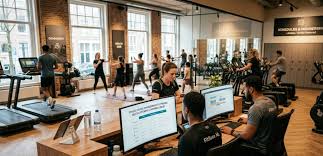
Fitness management software for multi-sport facilities is a platform designed to unify the operational management of complexes that offer multiple sport and fitness areas under one roof or one brand. It manages a unified dashboard across all facility areas, cross-facility member access and profiles, court and pool and studio and gym floor booking, centralised billing and membership management, staff and instructor scheduling across areas, facility utilisation and occupancy tracking, reporting and revenue analytics across all areas, and mobile access for staff and members.
The distinction from single-sport software is scope and integration. A yoga studio management tool handles one studio. A swim club platform handles one pool. Multi-sport fitness management software handles all of them within a single system, ensuring that a member who participates across multiple areas has one profile, one membership, one payment method, and one relationship with the facility.

Why Multi-Sport Facilities Need Unified Management Software
i. Separate Systems Per Area Create Data Silos
When the gym, pool, and studios each run their own software, member data is fragmented. A member’s gym attendance is invisible to the pool manager. A Pilates instructor does not know that a new client is already an active gym member. Marketing campaigns go to the gym database but miss pool-only members. These silos create operational inefficiency and a disjointed member experience.
ii. Members Expect One Membership Across All Facilities
Modern facility members expect a single membership that grants access to every area. They do not want to maintain separate accounts, make separate payments, or manage separate bookings for each sport. Unified membership management — one profile, one payment, one portal — is a baseline expectation for any serious multi-sport facility.
iii. Facility Booking Conflicts Across Courts, Pools, and Studios
When a tennis court is double-booked because the court calendar does not communicate with the studio schedule, or a pool lane is reserved for a swim school session that conflicts with a member booking, the result is frustration and operational disruption. A unified scheduling system prevents cross-facility conflicts by managing all bookable resources in one timetable.
iv. Revenue Reporting Needs to Cover All Areas in One View
A facility manager needs to know total revenue, not gym revenue separately from pool revenue separately from studio revenue. Unified financial reporting shows contribution by area, membership type, and time period in a single dashboard, enabling informed decisions about resource allocation, pricing, and growth investment.
Core Features of Multi-Sport Fitness Management Software
i. Unified Dashboard Across All Facility Areas
A single dashboard should provide a real-time overview of every area: today’s bookings, current occupancy, upcoming classes, staff on duty, and key financial metrics. Facility managers should not need to log into multiple systems to understand what is happening across their complex.
ii. Cross-Facility Member Access and Profiles
Every member should have one profile that captures their activity across all areas: gym check-ins, pool bookings, studio classes, court reservations, and academy enrolments. Membership tiers should be configurable to grant access to specific areas or all areas based on plan type.
iii. Court, Pool, Studio, and Gym Floor Booking
The platform must handle resource-specific booking: tennis courts with time-slot reservations, pool lanes with capacity management, studio classes with equipment-based limits, and gym floor access with occupancy tracking. All bookable resources should be visible to members through a single booking interface.
iv. Centralised Billing and Membership Management
One membership, one invoice, one payment method. The platform must support membership tiers (gym-only, pool-only, all-access, family), add-on services (personal training, private lessons), and varied billing cycles (monthly, quarterly, annual). For GCC facilities, native support for Mada, Benefit, STC Pay, Apple Pay, and Tabby is essential.
v. Staff and Instructor Scheduling Across Areas
Staff scheduling must account for certifications, area assignments, availability, and workload across the full facility. A fitness instructor who also teaches yoga should appear on both schedules without conflict. Substitution workflows should be built into the system.
vi. Facility Utilisation and Occupancy Tracking
Real-time occupancy data by area informs operational decisions: opening underused areas during peak demand, adjusting staffing levels based on actual traffic, and identifying scheduling opportunities. Historical utilisation data supports strategic planning and capital investment decisions.
vii. Reporting and Revenue Analytics Across All Areas
Revenue by area, membership conversion rates, retention by membership type, class fill rates, facility utilisation trends, and member acquisition cost should all be available in a consolidated reporting dashboard. The ability to compare performance across areas enables evidence-based management.
viii. Mobile Access for Staff and Members
Staff need mobile access to check schedules, take attendance, and view member profiles from anywhere in the facility. Members need mobile booking, check-in, and account management. For GCC facilities, mobile access must be fully functional in Arabic.
Comparing the Leading Fitness Management Software Platforms
i. Mindbody
Mindbody is the broadest platform in the fitness management category, powering over 40,000 businesses globally. It offers an extensive feature set, a consumer marketplace that drives member discovery, and a wide integration ecosystem. Pricing starts at approximately $139 per month and scales significantly for multi-location and enterprise features. The platform is complex, onboarding can be lengthy, and there is no Arabic language support. Best for large, established multi-sport facilities that prioritise marketplace exposure and can invest in a premium, complex platform.
ii. Glofox (ABC Fitness)
Glofox focuses on boutique and multi-location fitness with branded app capabilities, member management, and Stripe-based payment processing. It was acquired by ABC Fitness Solutions in 2022. Post-acquisition, some community members have raised concerns about product direction and support. Pricing is opaque, ranging from approximately $110 to $300 per month. No Arabic support. Best for multi-location fitness businesses in English-speaking markets wanting branded app and franchise management features.
iii. ClubReady
ClubReady is a franchise-scale platform with centralised billing, location-specific controls, and multi-location dashboards. It is designed for franchise operations with corporate reporting requirements. The platform is overkill for single-site complexes, pricing is premium, and there is no Arabic support. Best for large fitness franchises with 10 or more locations requiring centralised corporate oversight.
iv. PerfectGym
PerfectGym is a European multi-location and chain-operator platform with strong facility management, access control, and member engagement features. It serves large fitness chains across Europe and Asia. Recognition in the GCC market is limited, and there is no Arabic interface. Best for European fitness chains seeking a comprehensive enterprise management solution.
v. Tamarran
Tamarran manages multi-sport facilities through its fitness chains and multi-sport platform. A unified dashboard across gym, pool, courts, studios, and academies, cross-facility member profiles, resource-specific booking for every area, centralised billing with GCC payment methods (Mada, Benefit, STC Pay, Tabby, Apple Pay), staff scheduling across areas, facility utilisation tracking, and consolidated analytics are all included in one system.
For GCC multi-sport facilities, Tamarran is the only platform that combines genuine multi-sport operational depth with full Arabic-language operation across every interface. A member who uses the gym, swims, plays tennis, and enrols their child in a football academy has one profile, one membership, one payment method, and one relationship with the facility — all managed in Arabic and English. The platform scales from a single complex to a multi-location operation without requiring migration. Tamarran reports serving over 300 sports facilities across the GCC. Free data migration, one-week setup, and 24/7 Arabic and English support complete the package.
How to Choose Fitness Management Software for Your Facility
i. Does it support every area in your facility? If the platform handles gyms but not pools, or studios but not courts, you will end up running multiple systems — which is exactly the problem you are trying to solve. Confirm multi-sport coverage before evaluating anything else.
ii. Can members have one profile across all areas? Cross-facility member profiles are the foundation of unified management. If the platform treats each area as a separate database, data silos will persist.
iii. Is Arabic language support comprehensive? For GCC facilities, Arabic must extend to the member portal, staff interfaces, billing, scheduling, and communications. Surface-level translation is not sufficient.
iv. Does it scale to multiple locations? If your facility plans to expand, the platform must support multi-location management with centralised reporting and location-specific controls. Migrating platforms during expansion is expensive and disruptive.

Frequently Asked Questions
Q1. Can one platform manage a gym, pool, and tennis courts together?
Ans. Yes, Tamarran manages all facility areas within a single platform. Gym floor access, pool lane bookings, court reservations, studio classes, and academy programmes are all handled through one system with unified member profiles and centralised billing.
Q2. How does unified membership work across different areas?
Ans. Tamarran supports configurable membership tiers that grant access to specific areas (gym-only, pool-only) or all areas (all-access). Members have one profile, one payment method, and one portal regardless of how many areas they use. Family memberships and corporate accounts are also supported.
Q3. Is there fitness management software available in Arabic?
Ans. Most international fitness platforms offer English-only interfaces. Tamarran provides full Arabic-language functionality across every interface — member portal, staff dashboards, booking, billing, scheduling, and reporting — making it the most practical option for multi-sport facilities in Saudi Arabia, the UAE, Qatar, and the broader GCC.
Q4. Can the platform handle both fitness operations and sport academies?
Ans. Yes, Tamarran manages fitness operations (gym memberships, class bookings, studio scheduling) alongside sport academy programmes (player development, age-group scheduling, parent portals, term billing) within the same platform. This is particularly valuable for facilities that run both a fitness centre and youth sport academies.
Conclusion
A multi-sport facility is only as good as its infrastructure. When the gym, pool, courts, and studios operate on separate systems, the result is fragmented data, duplicated effort, and a member experience that feels disconnected. Unified fitness management software brings everything together: one dashboard, one member profile, one billing system, and one source of truth for every decision.
For GCC multi-sport facilities, Tamarran is the platform built for this challenge: genuine multi-sport coverage, full Arabic-language operation, GCC payment methods, cross-facility member management, and the scalability to grow from one complex to a multi-location operation.
Pingback: Sports Club Management Software 2026: Complete Buyer's Guide